

Nail health, part 2
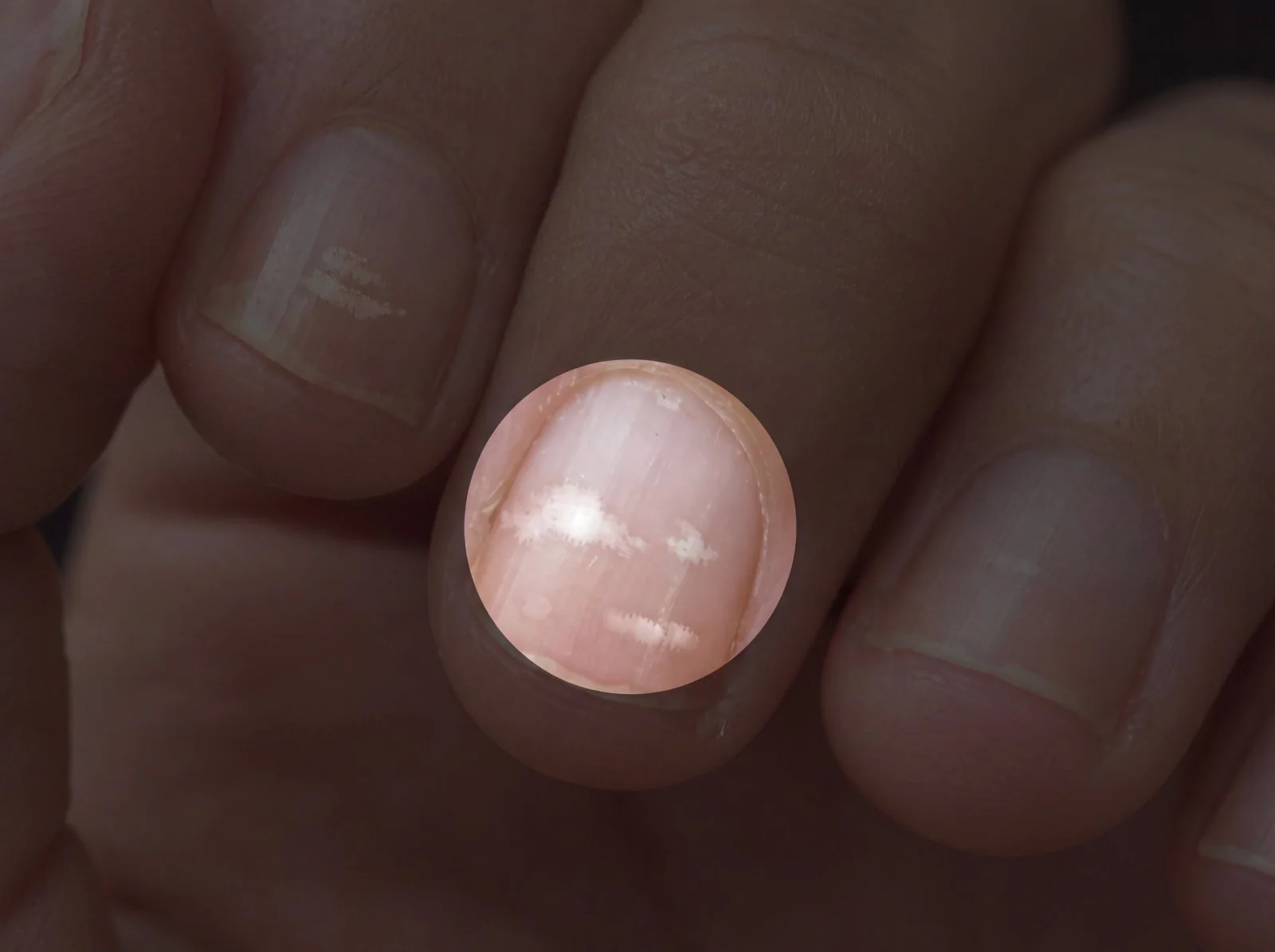
In part 1, we discussed small white spots and ridges. This time, let us take a closer look at three features that often raise questions: a nail that is white over half its surface, white lines running across it, and nails that have become flat and thin.
First of all: a nail technician does not make a diagnosis. These signs often have a harmless explanation, but only a doctor or dermatologist can determine their cause. Our role at the salon is to notice them and advise you to discuss them.
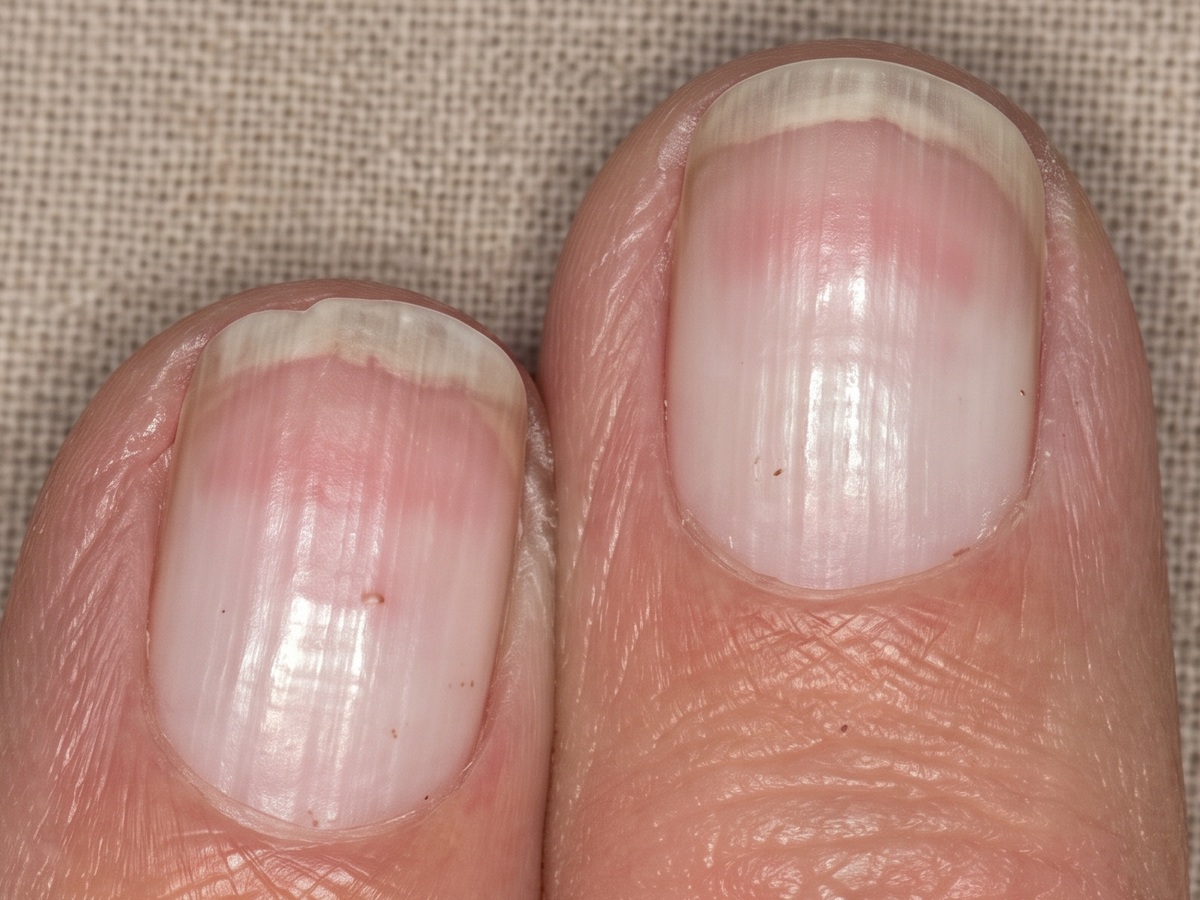
A half-white nail: ‘half-and-half nails’
What does it look like?
The part of the nail near the base is white and opaque, while the tip remains pinkish, red or brownish. The boundary between the two areas is distinct, often around the middle of the nail. These are known as Lindsay's nails, or ‘half-and-half’ nails.
What it may indicate
This appearance is mainly described in people with chronic kidney disease. It does not disappear when you press on the nail and does not move as the nail grows.
Not to be confused with Terry's nails
With Terry's nails, almost the entire nail is white, with only a narrow pinkish band at the tip. They are associated with other conditions (liver disease, heart failure, diabetes) and can also appear with age. Only a doctor can tell the difference and investigate the cause.
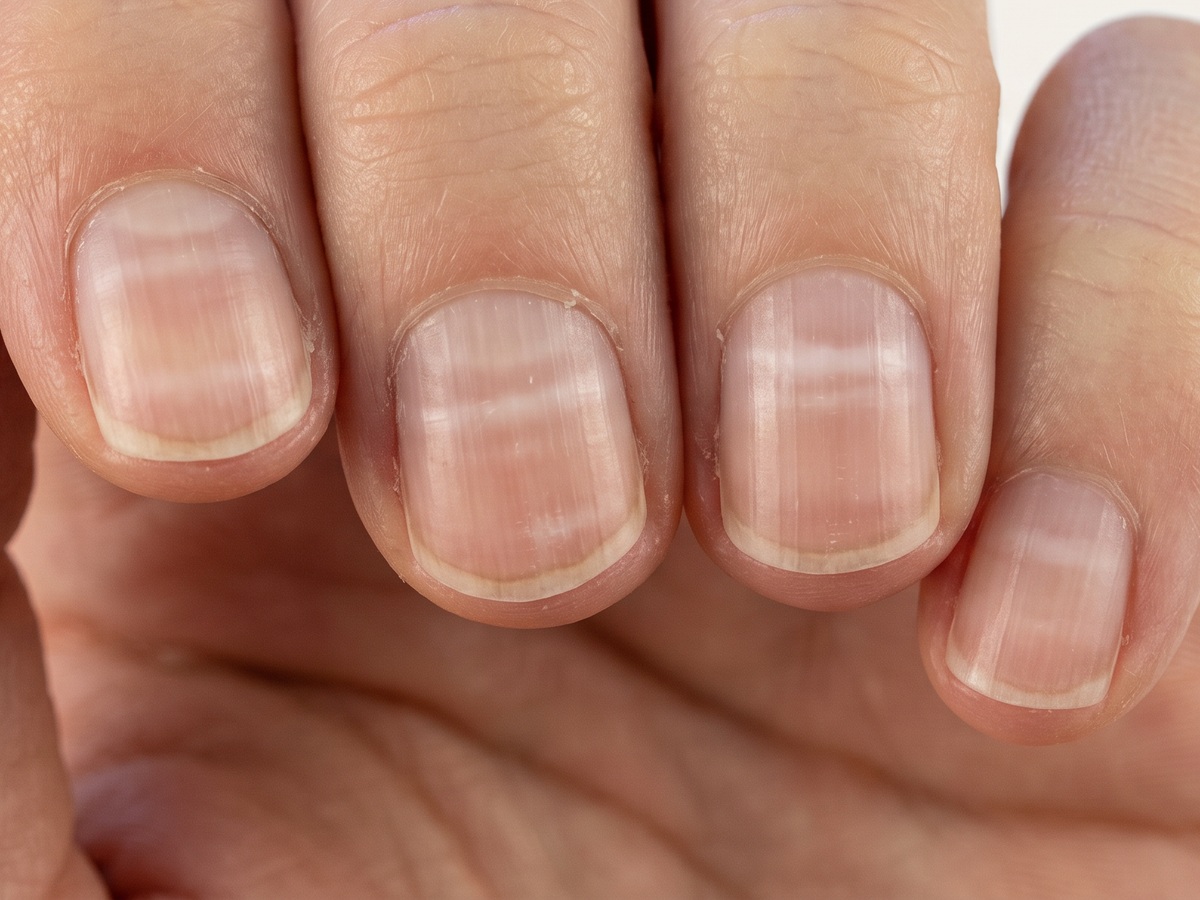
White lines running across the nail
Most often, a minor knock
One or more horizontal white lines very often result from minor trauma to the matrix, the area beneath the cuticle where the nail forms: a knock, or a manicure that puts too much pressure on the cuticle area. The line then moves as the nail grows and is eventually trimmed away. This is one of the reasons why we work on the cuticles precisely and without damaging the matrix during our russian manicure.
Mees' lines
When a white line appears at the same level on several nails at once, it is sometimes referred to as Mees' lines. They move as the nail grows. They are classically described following poisoning (particularly arsenic poisoning), intensive treatment or a severe illness that has temporarily disrupted nail formation.
Muehrcke's lines
These are double, parallel white bands that do not move as the nail grows and fade when you press on the nail. They are associated with low levels of protein in the blood (hypoalbuminaemia). Again, this is a sign to show a doctor.
Muehrcke's lines and Mees' lines
Muehrcke's lines and Mees' lines are two nail abnormalities that appear as transverse white bands, but have different causes, mechanisms and behaviours.
- Key feature: Mees' lines move towards the tip of the nail as it grows, eventually disappearing when the nail is trimmed. This is true leukonychia of the nail plate.
- Key feature: Muehrcke's lines do not move as the nail grows, because the abnormality is not in the nail plate itself, but in the nail bed (beneath the nail).
- Pressure test: The bands blanch or temporarily disappear when pressed with a finger.
Flat, thin nails
A nail that loses its natural curve and becomes flat, thin and fragile may be linked to a deficiency, particularly iron deficiency (folate is also sometimes mentioned). At a more advanced stage, the nail may even become spoon-shaped. Other factors also play a part: genetics, frequently having your hands in water, and detergents.
If your nails change shape for no apparent reason, a blood test prescribed by your doctor can check your nutrient reserves.
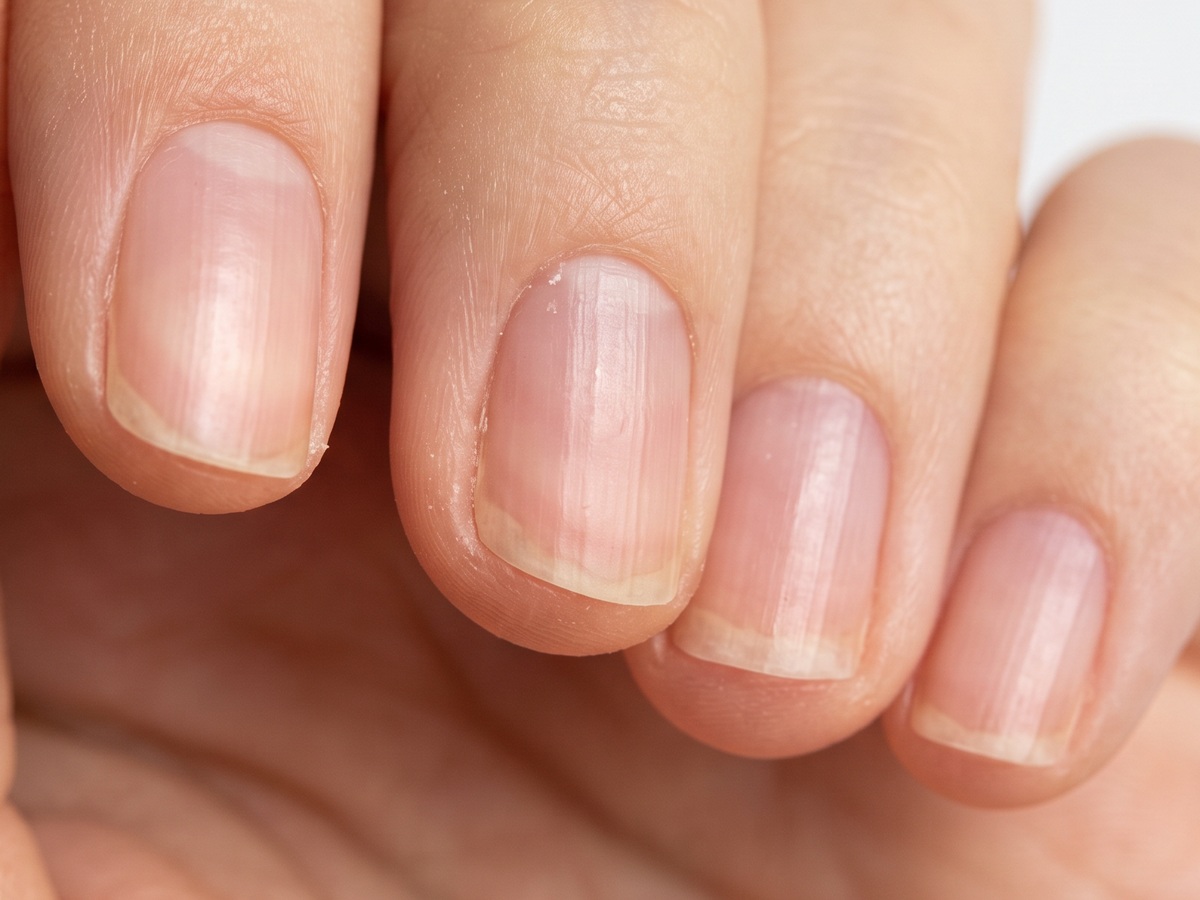
What about the white area at the tip of the nail?
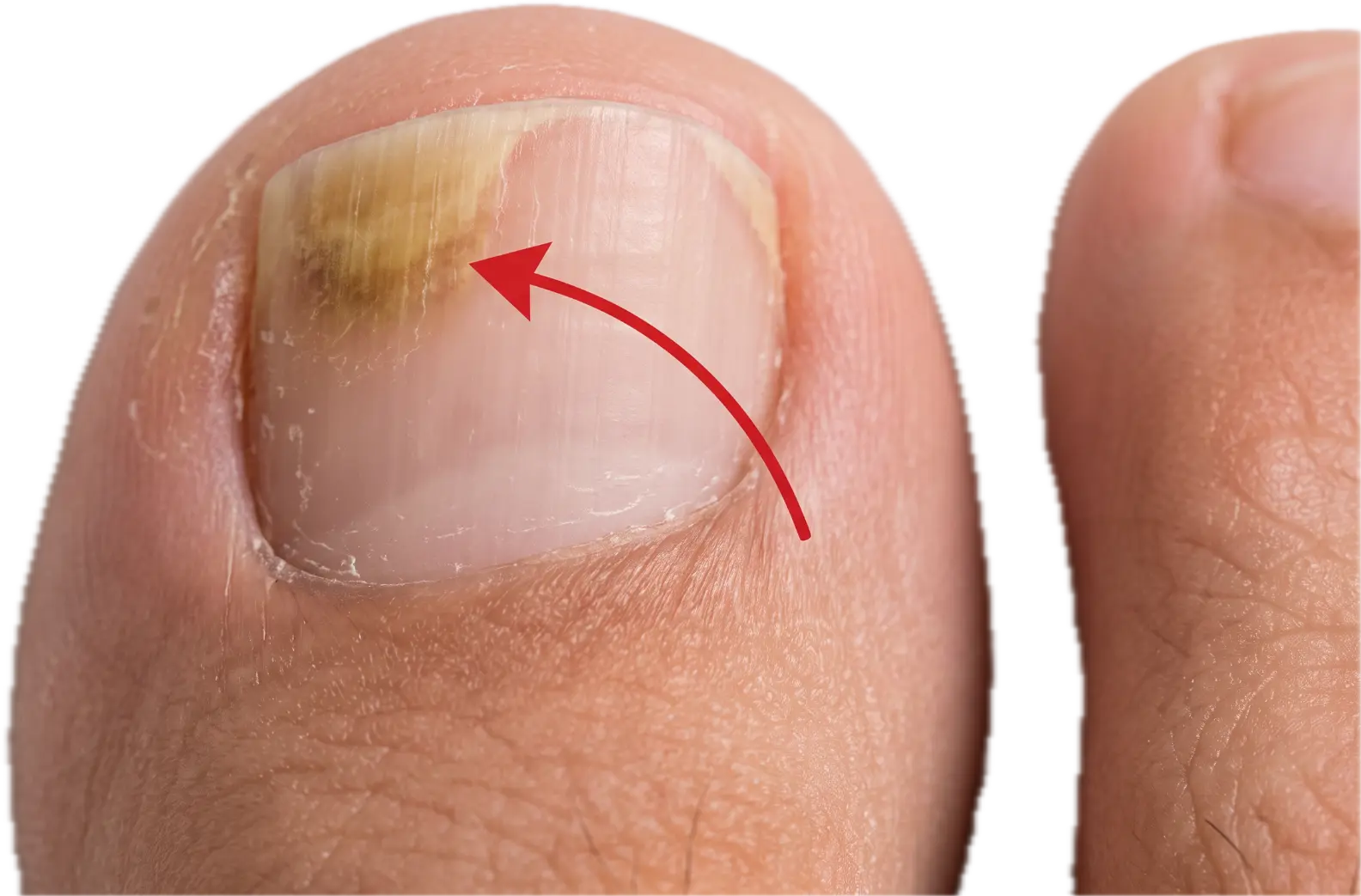
A white area spreading from the tip of the nail, with a sense that the nail is ‘hollow’, is not discolouration: it is often separation. We explain this in detail in our article ononycholysis.
At the salon: observe before treating
Before every manicure or russian pedicure, we take the time to examine your nails. If we notice anything unusual, we simply tell you, adapt the treatment and advise you to seek medical advice. A healthy nail is the foundation of any beautiful manicure.
Frequently asked questions
Are white lines on the nails serious?
Usually not: they result from a minor knock or a manicure that puts too much pressure on the cuticles, and disappear as the nail grows. If they appear on several nails at once, or are accompanied by other symptoms, speak to your doctor.
Why is my nail white at the base and pink at the tip?
This appearance, known as a ‘half-and-half nail’ or Lindsay's nail, is mainly described in cases of chronic kidney disease, but only a doctor can determine the cause. Do not hesitate to show it to them.
Can you have a manicure if you have white nails?
Yes, in most cases. We always examine the nail before treatment and adapt the service. If there is any doubt (separation, infection), we will advise you to wait for advice from a healthcare professional.