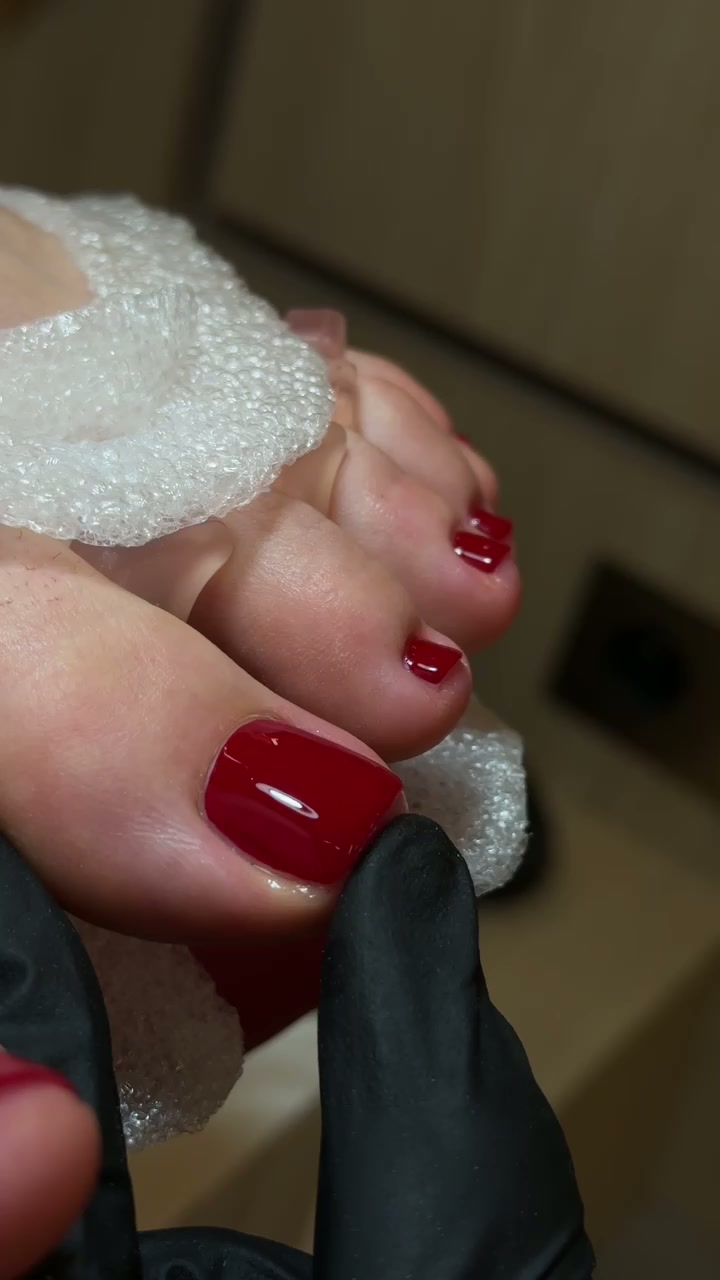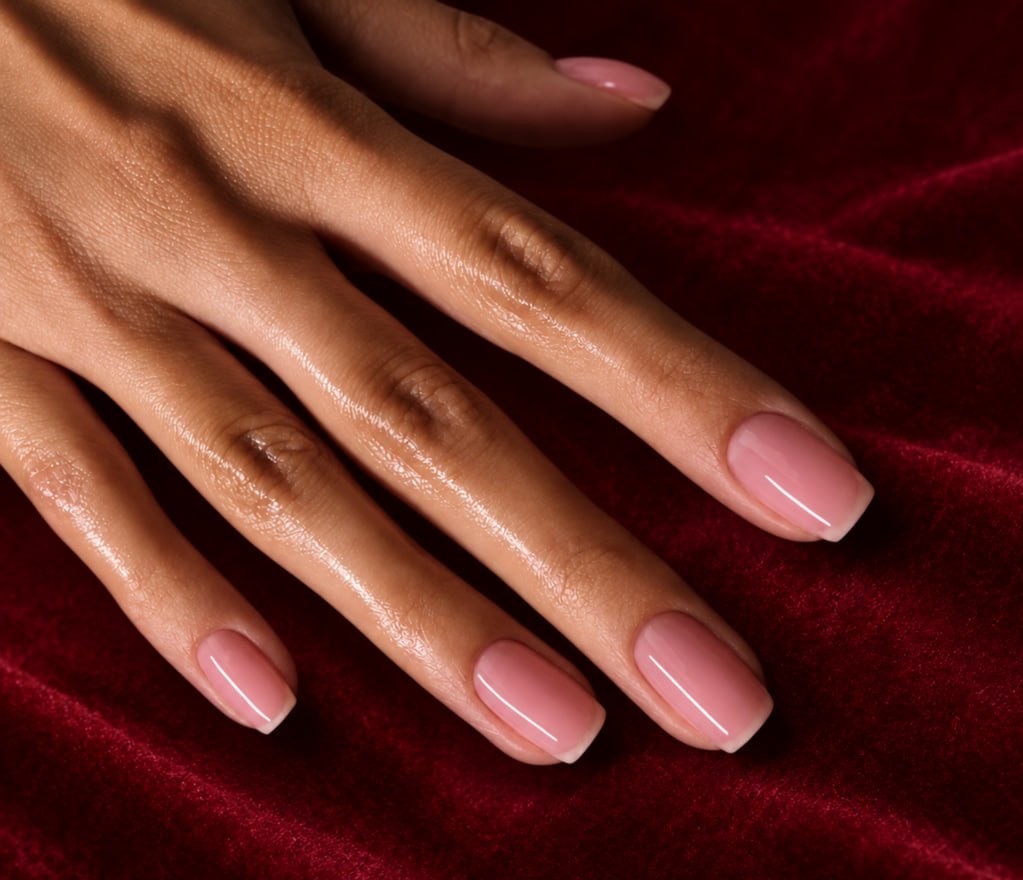

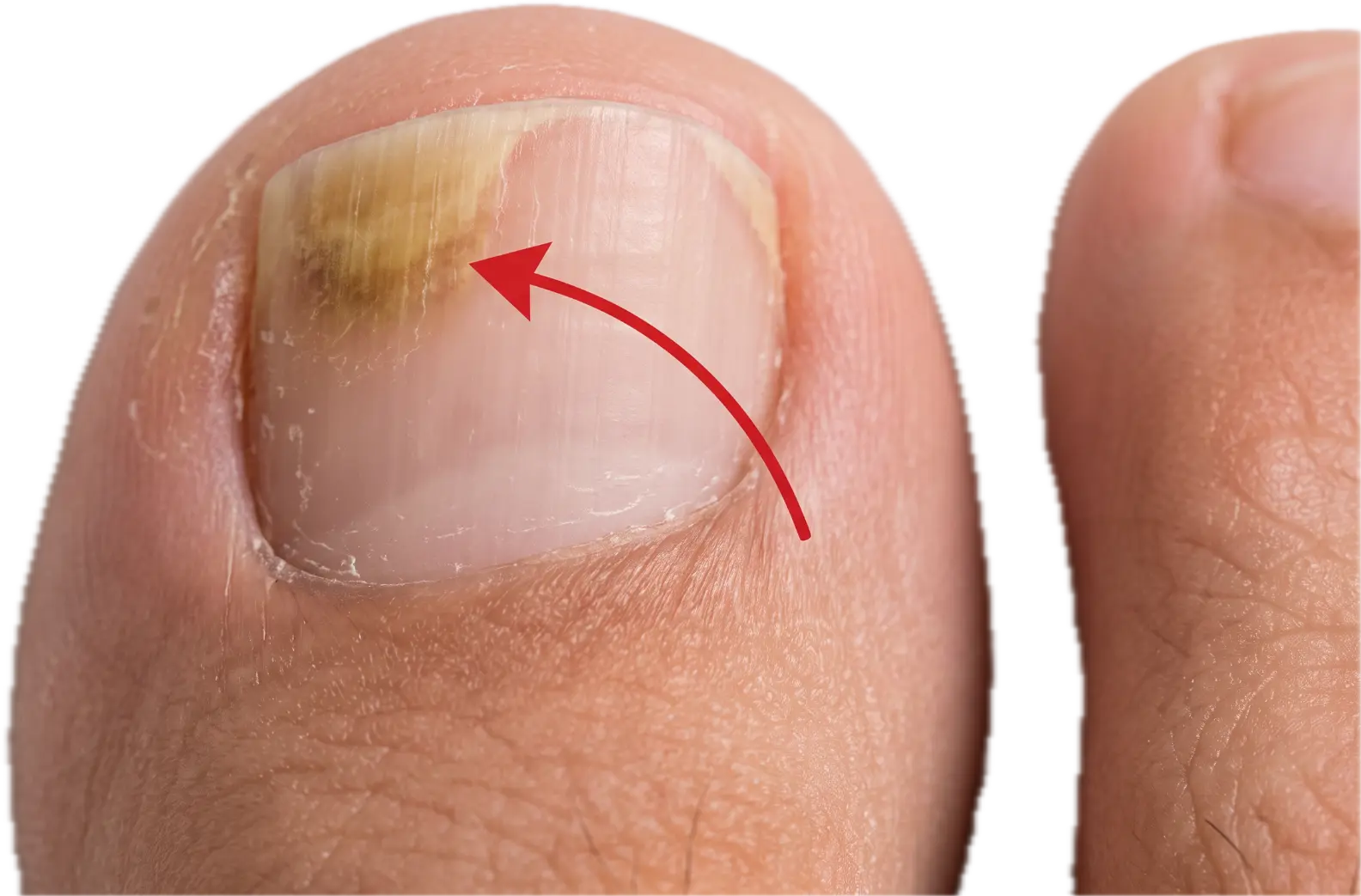

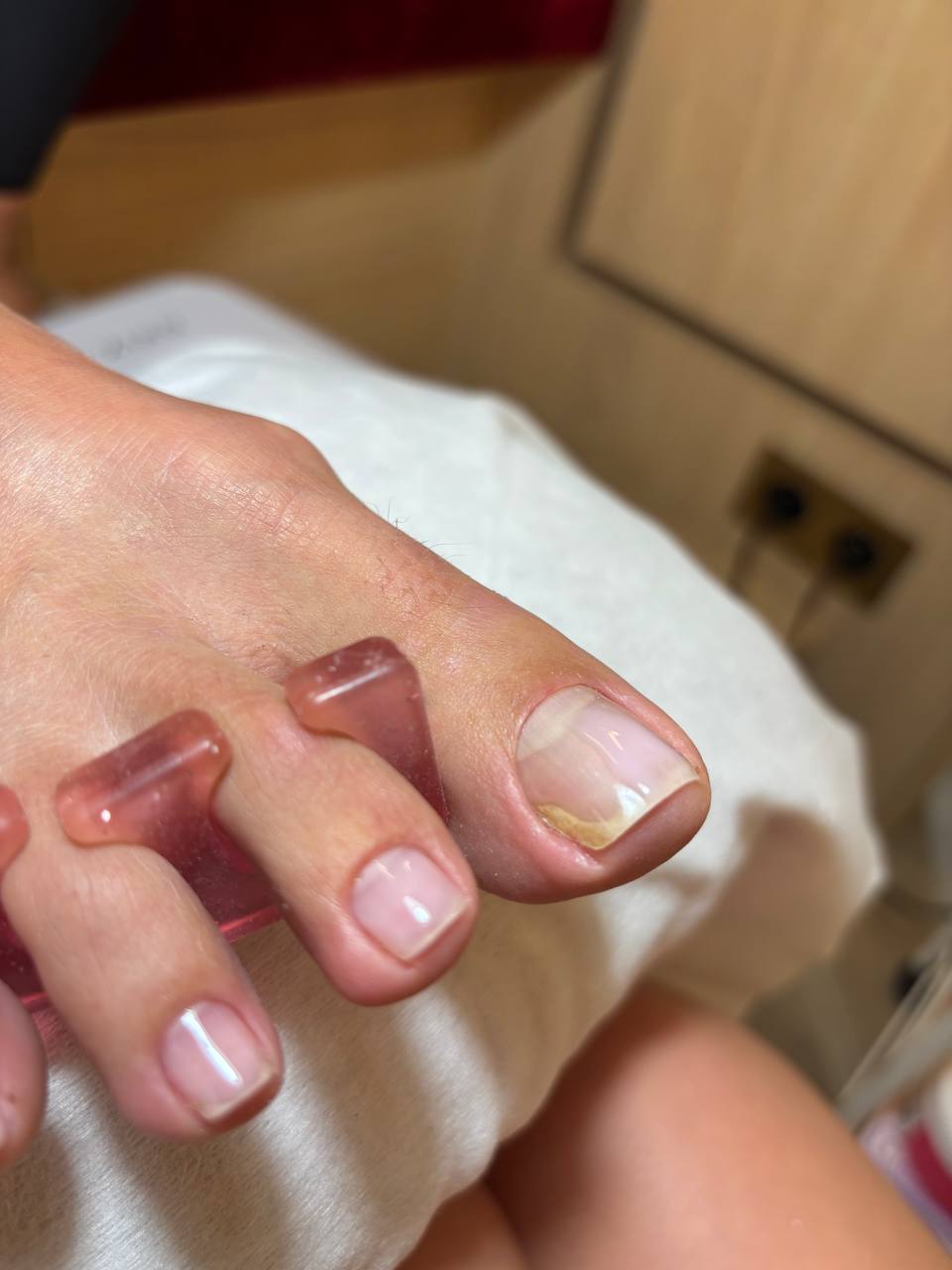
Onycholysis is the separation of the nail from its bed, the skin just beneath it: a white or yellowish area spreading beneath the nail, or a free edge that seems ‘hollow’, are often the first signs. Before every russian pedicure, our nail technicians examine your toenails. It can affect both fingernails and toenails, but is much more common on toenails because feet are subjected to pressure, friction and confinement every day.
What is onycholysis?
Normally, the nail plate adheres to the nail bed. In onycholysis, this attachment breaks down, usually starting at the free edge, and the separation progresses towards the cuticle. The space created beneath the nail traps moisture and dirt, encouraging infections if left untreated.
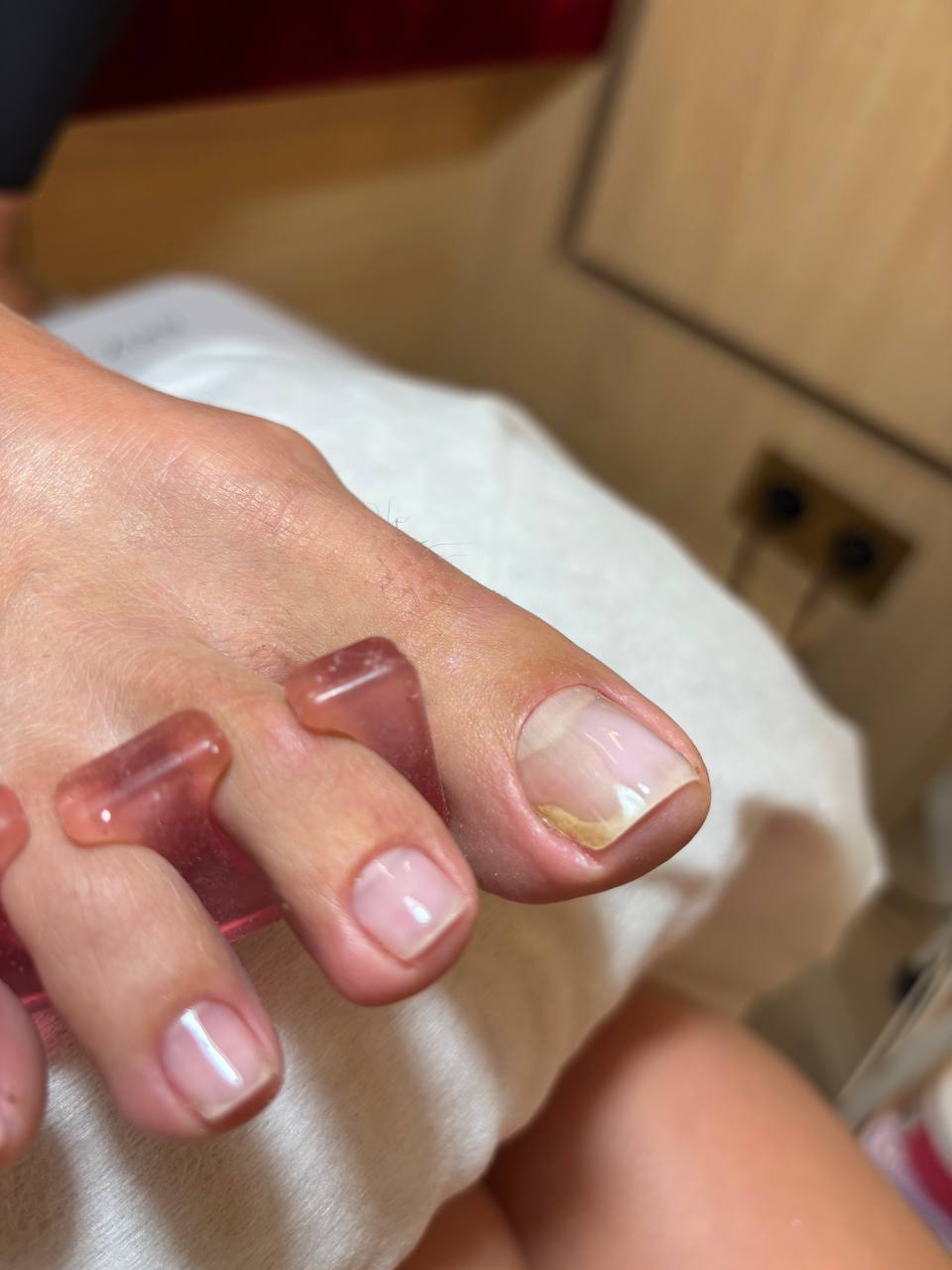
The most common causes on the feet
Socks that are too small
It is rarely considered, yet it is a genuine cause. A sock that is too tight constantly compresses the toes and presses on the tip of the nail all day long. The right approach: never choose socks that are too tight, and if in doubt, go up a size.
Tight shoes or shoes that narrow the foot
Court shoes, pointed ankle boots and, more generally, any shoes that narrow the shape of the foot: they compress the forefoot and cause the nail to knock against the shoe with every step. These repeated minor impacts eventually separate the nail from its bed, particularly on the big toe.
Toenails that are too long
A long nail acts as a lever: every contact with the shoe pushes it upwards and gradually pulls it away from the nail bed. Toenails should be kept short, cut straight across and not extend beyond the tip of the toe.
A cause common to fingernails and toenails: semi-permanent polish left on too long
Semi-permanent polish is not designed to stay on indefinitely. Beyond 6 weeks, the material ages: it hardens, loses its flexibility and no longer follows the nail's natural movements. Meanwhile, the nail grows, the point of tension shifts, and the application acts as a lever pulling on the natural nail. Small areas of separation appear, water and impurities seep in, and the natural nail becomes damaged.
Keeping to the removal and reapplication schedule protects your nail.
Explore our toenail care.
Other possible causes
Onycholysis can also be linked to an infection (particularly a fungal infection), certain skin conditions such as psoriasis, repeated contact with irritants, or trauma. This is why advice from a healthcare professional is important as soon as the separation spreads.
At Madame Belle, we can help you spot it
During your appointment, our nail technicians examine your nails and can identify signs of onycholysis. In this case, we will advise you:
- to avoid semi-permanent polish while the nail recovers;
- to consult a podiatrist for toenails, or a dermatologist for fingernails, who will make a diagnosis and determine the cause.
What should you do at each stage?
If the onycholysis is at an early stage
It may resolve on its own with a few simple measures:
- keep nails cut short to eliminate the leverage effect;
- apply a nourishing treatment every evening to the cuticle area, where the new nail grows;
- remove the cause: well-fitting shoes and socks, and no semi-permanent polish during this period.
The part that has already separated will not reattach, but the new nail growing in adheres normally. A clear improvement may be seen in 4 to 6 weeks.
If the onycholysis is advanced
The separated part of the nail must then be cut away completely to prevent it from catching and infections from developing underneath, followed by a prompt consultation with a podiatrist.
In summary
- Onycholysis affects toenails more often than fingernails.
- Socks that are too small, tight shoes and long nails are common causes.
- Semi-permanent polish must not be left on for more than 6 weeks.
- Caught early, it often resolves in 4 to 6 weeks; at an advanced stage, it requires trimming and advice from a podiatrist.
Frequently asked questions
Is onycholysis contagious?
No, the separation itself is not contagious. However, if it is linked to a fungal infection, that infection can spread: hence the importance of consulting a podiatrist or dermatologist.
Can you apply semi-permanent polish to a separated nail?
No. Until the nail has recovered, it is best to avoid semi-permanent polish: it would trap moisture beneath the nail and worsen the separation.
Will a separated nail reattach?
No, the separated part will not reattach. It is the new nail, as it grows, that adheres normally to the nail bed again.
How long does it take for onycholysis to go away?
If it is at an early stage, a clear improvement is possible in 4 to 6 weeks with nails cut short and daily cuticle care. If it is advanced, the separated part must be cut away and a podiatrist consulted.
How do you treat onycholysis?
We do not make diagnoses: only a podiatrist, for toenails, or a dermatologist, for fingernails, can determine the cause and suggest treatment. At an early stage, a few simple measures help the new nail grow back healthily: keep nails cut short, apply a nourishing treatment to the cuticle every evening, wear well-fitting shoes and socks, and avoid semi-permanent polish during this period. If it is advanced, the separated part must be cut away and a podiatrist consulted without delay.
Also discover our Russian pedicure in Paris. For your hands, discover our Russian manicure in Paris.