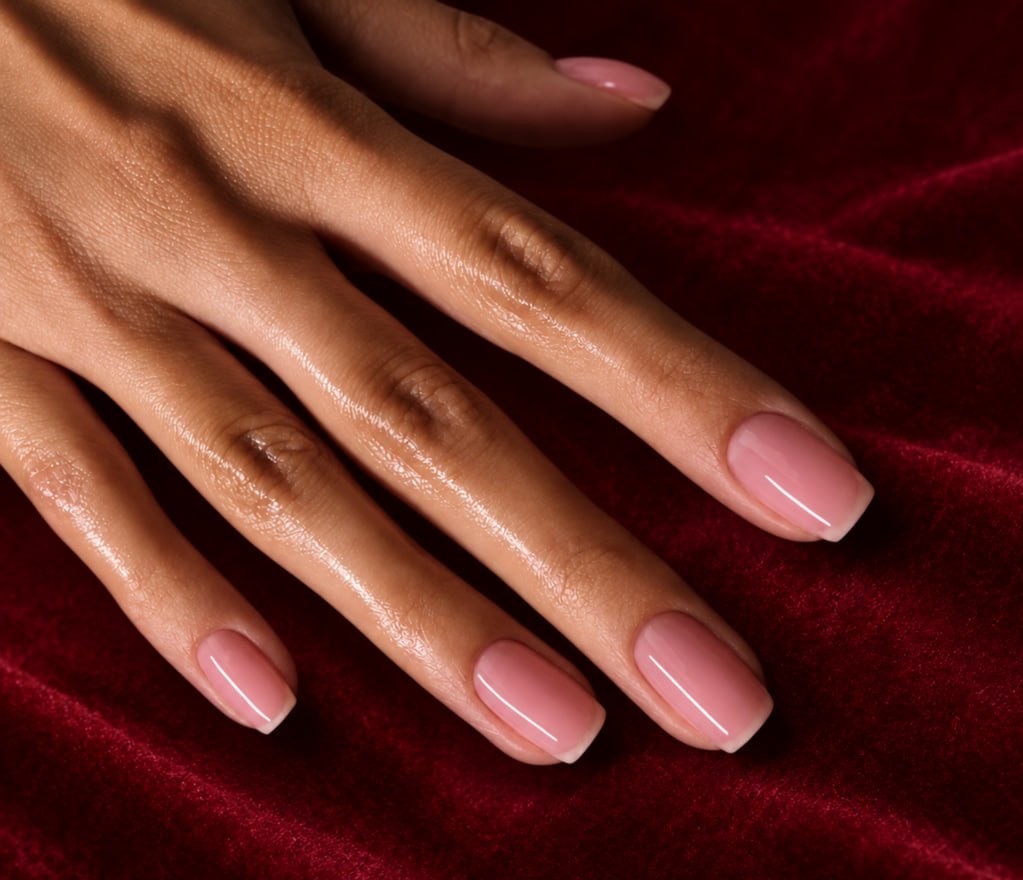


Thetoenail extension can enhance a damaged or broken nail. But it is only successful if the natural nail underneath is healthy and the length is appropriate for the foot. At Madame Belle, we check the condition of each nail before any application. Here is what we look for, what we advise against, and why we may sometimes decline a service.
Our approach
What is a toenail extension for?
At Madame Belle, a toenail extension serves an aesthetic and restorative purpose: covering a broken, damaged or partially missing nail to restore a well-groomed, harmonious appearance to the foot.
We always keep it short and natural in length. The aim is never to lengthen the nail, but to restore a beautiful shape.
Before application
When more than half the nail is missing
If more than half the natural nail is missing, the extension may not hold. Gel needs a sufficient nail surface to adhere to. Without it, it rests partly on the skin and lifts quickly.
In this case, we recommend waiting for the nail to grow back, or choosing a lighter treatment. We discuss this together before application.
What to avoid
Lengthening the big toenail: a trend to avoid
Long extensions on the big toenail have become a trend. At Madame Belle, we strongly advise against them.
Toenails are constantly subjected to pressure from shoes and the impact of walking. The longer the nail, the greater the leverage. With each step, the extension pulls on the natural nail and gradually lifts it from its bed: this is onycholysis.
Good to know
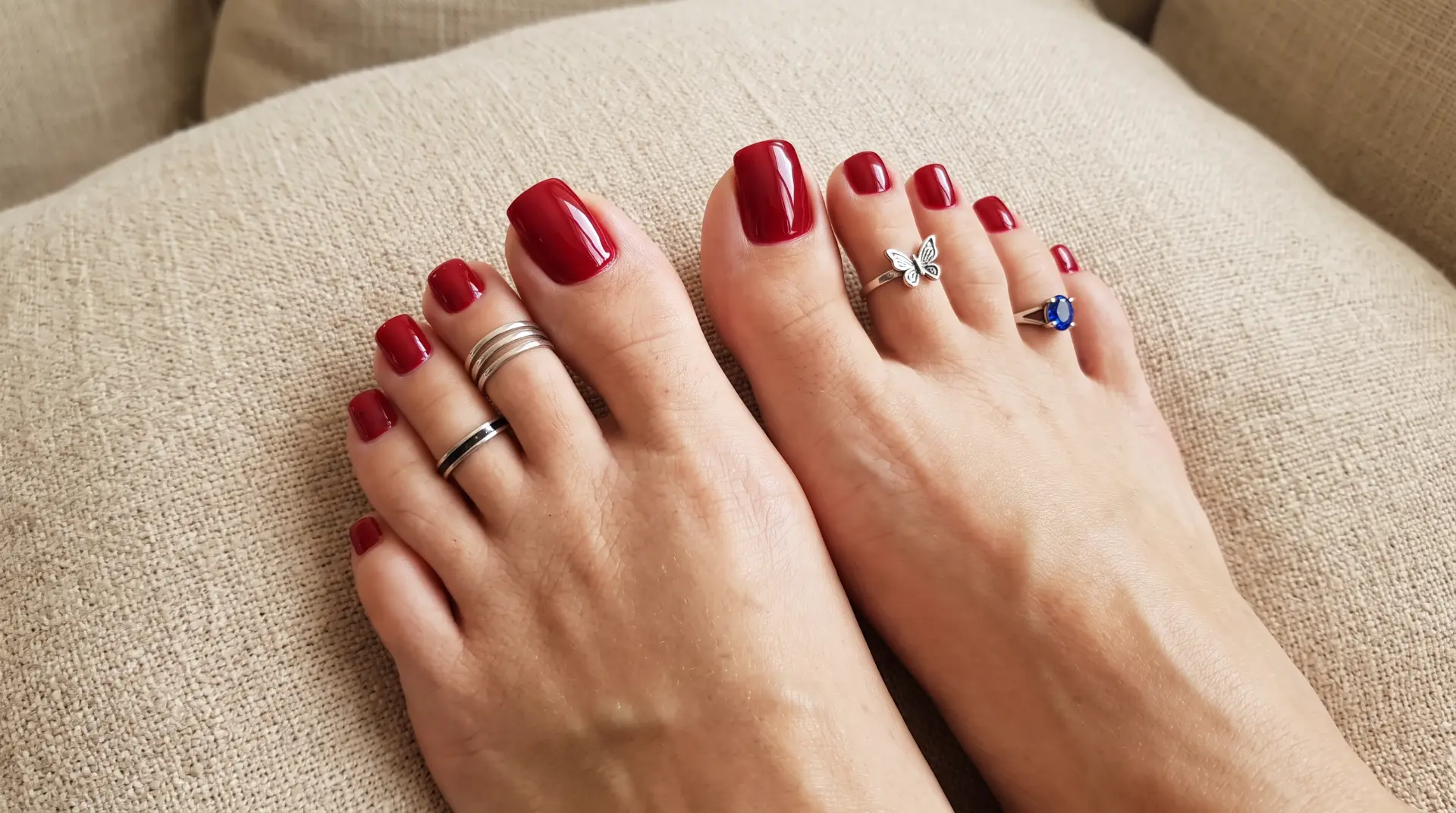
Pretty in a photo, risky in a shoe
In this photo, the length may look elegant. However, it is not a suitable length for a toenail.
26 bones
Each foot contains 26 bones, more than a quarter of the 206 bones in the human body. Together with the joints, tendons and ligaments, they form a finely tuned mechanism that carries the body's entire weight with every step.
In a closed-toe shoe, a nail that extends beyond the tip of the toe hits the end of the shoe with every step. It acts as a lever on the natural nail and pushes the toe backwards.
The consequences can appear after just 2 to 3 days of walking:
- pain beneath the nail and at the tip of the toe;
- a haematoma beneath the nail, which turns black or purple;
- separation of the nail from its bed: onycholysis.
But the pain is not limited to the nail. The pressure is transmitted to the entire toe: its bones (the phalanges) and joints are pushed backwards with every step. Repeated day after day, this strain can push the toe out of alignment, encourage ingrown toenails and contribute to lasting deformities, such as claw toes or hammer toes. These problems can cause pain for months, sometimes permanently, and require treatment from a podiatrist.
Understand
Closed-toe shoes and onycholysis: a little-known risk
We strongly advise against wearing tight closed-toe shoes with toenail extensions. Repeated pressure from the shoe on the nail significantly increases the risk of onycholysis.
Onycholysis is the separation of the nail plate from the skin beneath it. The nail becomes whitish where it lifts. The gap that forms beneath the nail traps moisture and encourages infections, particularly fungal infections.
Many clients are not even aware of this problem. It can also occur without extensions, for example with shoes or socks that are too small and compress the toes.
Good habits
The right length for a toenail
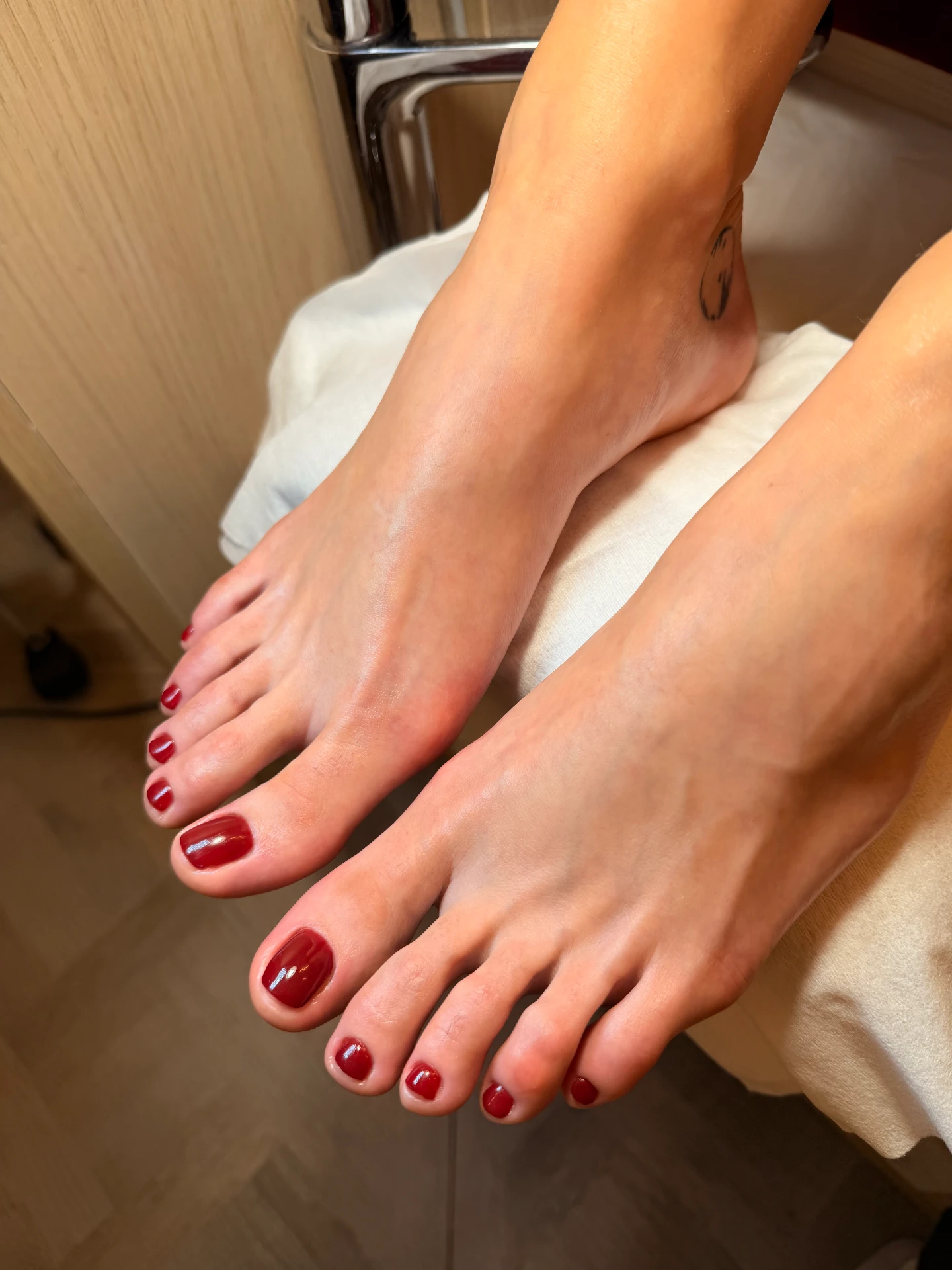
A toenail should be cut or filed as soon as it extends slightly beyond the tip of the toe. Ideally, it should be level with the fleshy tip of the toe, with a straight shape and gently softened corners, to reduce the risk of ingrown toenails.
At Madame Belle, we keep to this length for all our applications, including extensions.
Your health
When we decline to apply extensions
To protect your health, we do not apply extensions in the following cases:
- nail fungus (fungal infection);
- allergy: nails or skin that react to products;
- onycholysis: a nail separated from its bed.
In these situations, we do not apply semi-permanent polish either. We recommend consulting a healthcare professional before returning to the salon.
Our role
A purely cosmetic procedure
Some damaged nails need a reconstruction material that allows oxygen through so they can grow back healthily. This type of material is not used in beauty salons: it is reserved for podiatrists.
Our work remains purely cosmetic. We do not treat nail conditions and are not a substitute for medical advice. If your nail needs treatment, a podiatrist is the right professional to see.
If your nail lifts, becomes painful or changes colour, consult a podiatrist or dermatologist before any application.
Frequently asked questions
Can you get an extension on the big toenail?
Yes, Madame Belle offers this service, at a short, natural length. Please request it when booking, as it requires dedicated preparation time.
How long does a toenail extension last?
How long it lasts depends mainly on the available natural nail surface and the shoes worn. The more healthy nail remains, the better the adhesion.
Can I wear closed-toe shoes with an extension?
We advise against tight shoes: pressure on the nail increases the risk of onycholysis. Choose shoes with a wide toe box.
Can you apply an extension to a nail with a fungal infection?
No. In cases of fungal infection, allergy or onycholysis, we apply neither extensions nor semi-permanent polish. Consult a healthcare professional first.